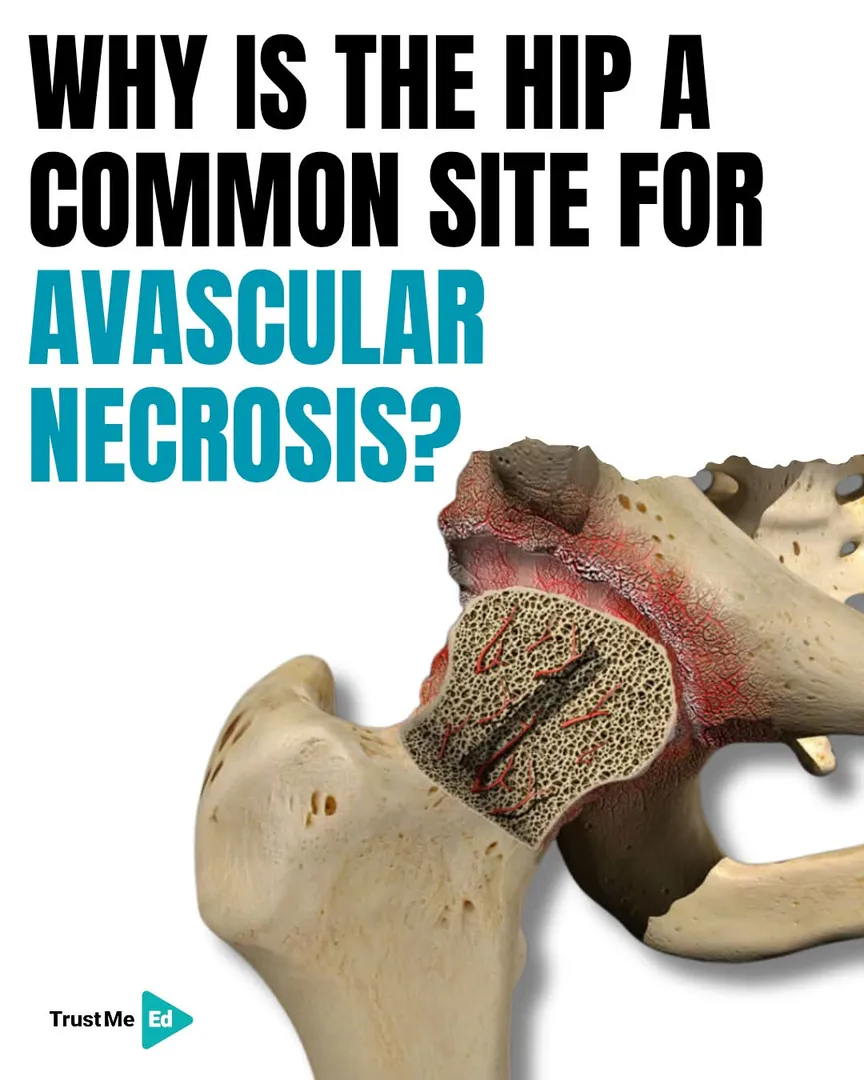
The hip—specifically the femoral head—is the most common site for Avascular Necrosis because of a few important anatomical and physiological reasons:
1. Limited Blood Supply
The femoral head gets its blood mainly from small vessels (retinacular arteries). These vessels are:
Thin
Easily compressed or damaged
So even a minor disruption (trauma, steroids, alcohol, etc.) can cut off blood flow.
2. End-Artery System (Poor Collateral Circulation)
Unlike some other bones, the femoral head has very little backup blood supply.
If one vessel is blocked, there are not enough alternative routes → bone tissue starts dying.
3. High Weight-Bearing Stress
The hip joint carries most of the body’s weight:
Standing
Walking
Running
This constant pressure increases the risk of:
Blood vessel compression
Microfractures
which can worsen blood supply problems.
4. Anatomical Position Inside Joint Capsule
The blood vessels run along the neck of the femur and are:
Vulnerable in fractures (especially neck of femur fractures)
Compressed by increased joint pressure
5. Slow Repair Capacity
Once blood supply is reduced:
Bone cells die (necrosis)
Repair is slow due to poor circulation
→ leads to collapse of the femoral head over time.
Simple Summary:
The hip is most affected because it has:
Fragile blood supply
Poor backup circulation
High mechanical stress
Keywords