
What is an ACL tear?
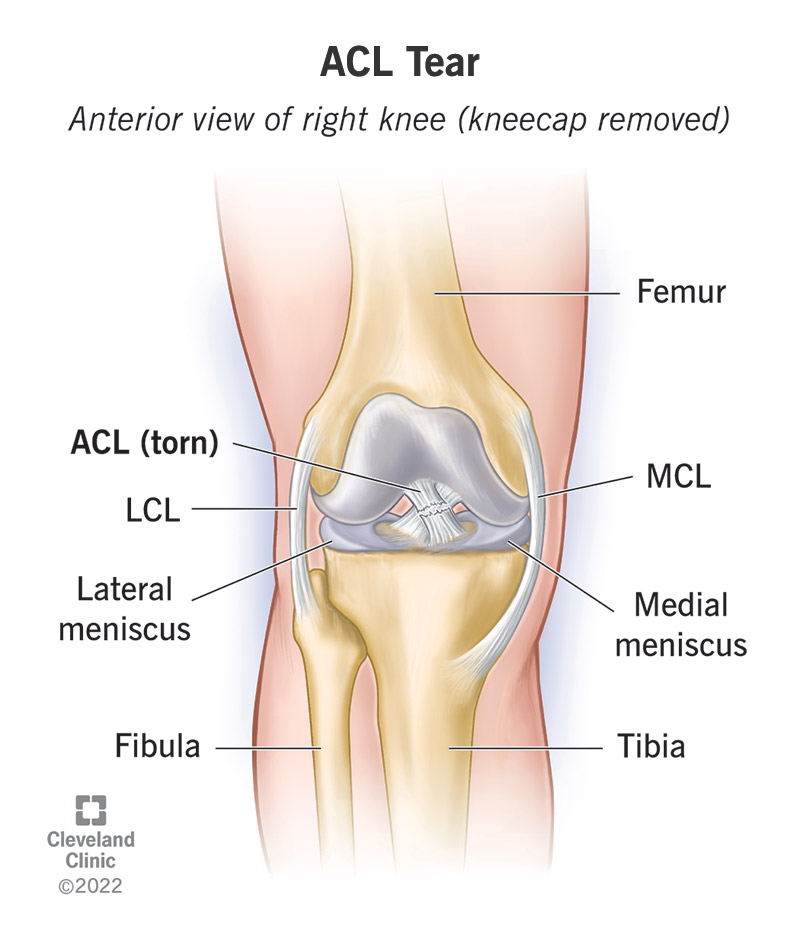
An ACL tear is an injury to the anterior cruciate ligament (ACL) in your knee.
The ACL is one of your knee ligaments. It connects your thigh bone (femur) to your shin bone (tibia). You have one ACL in each knee. It forms an “X” shape inside your knee with your posterior cruciate ligament (PCL). The ACL is closer to the front of your knee. The PCL is closer to the back of your knee.
Your ACL is like a strap that connects your bones and prevents your knee from bending or rotating too much. Anything that puts enough force on your knee to bend or twist it farther than its natural limit can injure or tear your ACL.
ACL tears are a common injury, especially among athletes. Visit a healthcare provider if your knee hurts, particularly if the pain started after an injury or physical activity.
Types of ACL injuries
Healthcare providers usually grade ACL injuries and tears. These grades are a quick way to describe the extent of your injury. ACL injury grades range from one (the least severe) to three (the most severe):
- Grade one: The injury stretched your ACL enough to damage it, but it’s still in one piece and holding your knee bones together.
- Grade two: The injury stretched your ACL so much that it was partially torn and loosened.
- Grade three: A complete tear — your ACL is in two pieces.
Symptoms and Causes
What are ACL tear symptoms?
The most common ACL tear symptoms include:
- Feeling or hearing a pop in your knee.
- Swelling.
- Pain (especially when you try to put weight on your knee).
- Weakness or feeling like your knee has given out.
- Losing your range of motion (how far you can move your knee).
What causes ACL tears?
Anything that puts too much force on your knee can tear your ACL. ACL tears happen when your knee moves or twists more than it naturally can.
The most common causes of ACL tears include:
- Sports injuries.
- Car accidents.
- Falls.
ACL tear risk factors
Anyone can experience an ACL tear. They’re much more common among athletes, especially those who play sports that involve suddenly stopping, twisting or changing directions. Some sports that cause frequent ACL tears include:
- Soccer.
- Football.
- Basketball.
- Gymnastics.
- Lacross
Anything that puts enough force on your knee to bend or twist it farther than its natural limit can tear your ACL. What is an ACL tear?
An ACL tear is an injury to the anterior cruciate ligament (ACL) in your knee.
Advertisement
Cleveland Clinic is a non-profit academic medical center. Advertising on our site helps support our mission. We do not endorse non-Cleveland Clinic products or services. Policy
The ACL is one of your knee ligaments. It connects your thigh bone (femur) to your shin bone (tibia). You have one ACL in each knee. It forms an “X” shape inside your knee with your posterior cruciate ligament (PCL). The ACL is closer to the front of your knee. The PCL is closer to the back of your knee.
Your ACL is like a strap that connects your bones and prevents your knee from bending or rotating too much. Anything that puts enough force on your knee to bend or twist it farther than its natural limit can injure or tear your ACL.
ACL tears are a common injury, especially among athletes. Visit a healthcare provider if your knee hurts, particularly if the pain started after an injury or physical activity.
Types of ACL injuries
Healthcare providers usually grade ACL injuries and tears. These grades are a quick way to describe the extent of your injury. ACL injury grades range from one (the least severe) to three (the most severe):
- Grade one: The injury stretched your ACL enough to damage it, but it’s still in one piece and holding your knee bones together.
- Grade two: The injury stretched your ACL so much that it was partially torn and loosened.
- Grade three: A complete tear — your ACL is in two pieces.
Advertisement
What does an ACL tear feel like?
Most people know the moment they tear their ACL. Sports injuries and other traumas that tear your ACL are usually obvious enough that you can say exactly when it happened.
People who experience an ACL tear usually feel or hear a pop in their knee. Your knee might give out (feel unstable and weak). ACL tears can be very painful, but some people only feel small discomfort. Visit a provider if you injured your knee — especially if you heard or felt a popping.
Keywords